Pickleball's Paddle Pioneers: Decoding the Strategies of Court-Dominating Duos and Solo Stars
Written by Ulrich Wagner · Apr 16, 2026
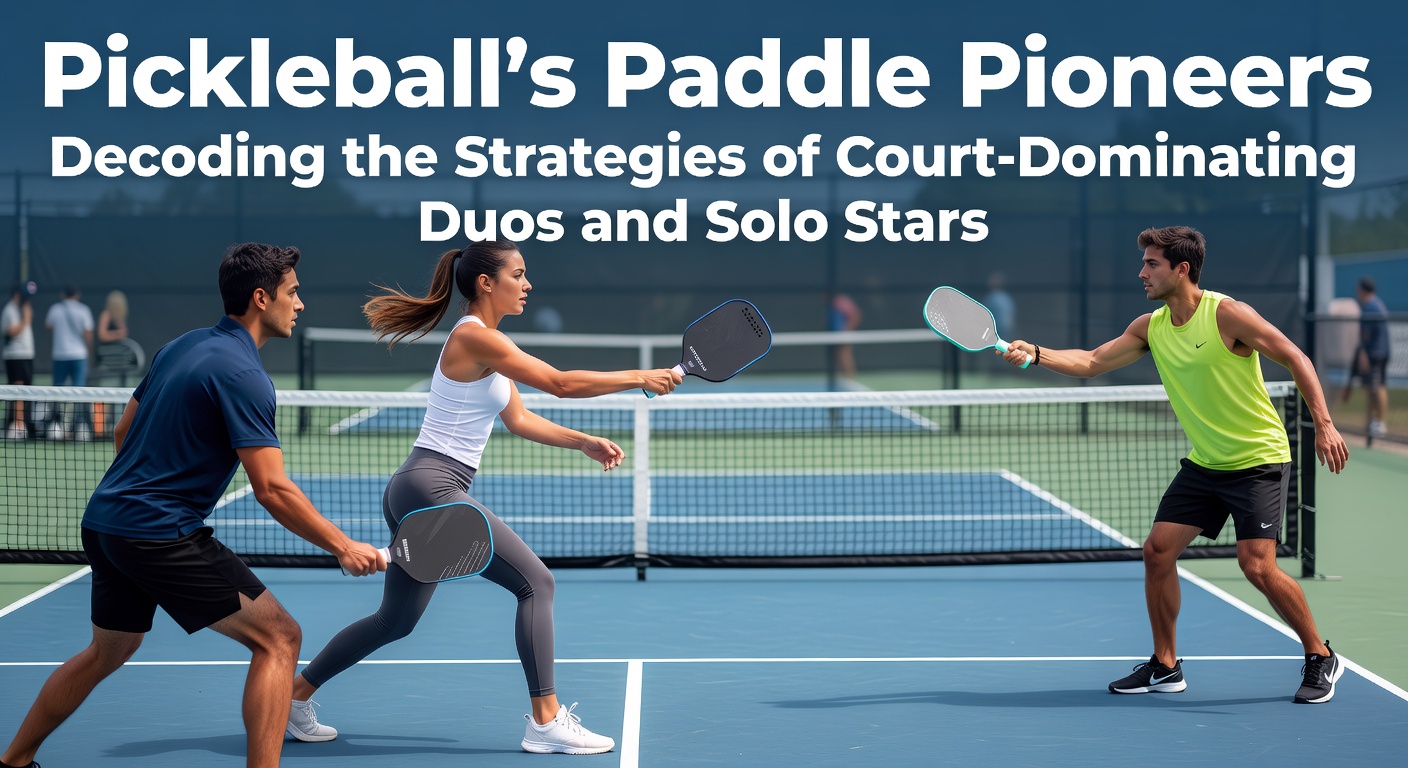
Pickleball's Paddle Pioneers: Decoding the Strategies of Court-Dominating Duos and Solo Stars
The Rise of Pickleball and Its Court Conquerors
Pickleball, that hybrid sport blending elements of tennis, badminton, and table tennis on a compact 20-by-44-foot court, has exploded in popularity, with participation numbers surging past 36 million players in the United States alone according to USA Pickleball data from recent years; observers note how pioneers in singles and doubles have shaped the game through innovative tactics, turning casual backyard play into a professional powerhouse. Data from the Professional Pickleball Association (PPA) tour reveals that top duos and solo stars dominate leaderboards by mastering the non-volley zone—affectionately called the kitchen—where volleys prove impossible just seven feet from the net, forcing players to rely on finesse over brute force. And while doubles matches command the spotlight, with teams coordinating like chess masters on a green battlefield, singles competitors push endurance limits, covering more ground in ways that highlight the sport's athletic demands.
What's interesting is how these paddle pioneers adapt strategies mid-rally, using soft dinks to lure opponents into errors or unleashing drives that clock speeds up to 50 miles per hour; researchers who've analyzed match footage from major events, such as those tracked by Pickleball Canada, find that winning percentages spike when players control the kitchen line, holding position for 70 percent or more of points. Take the evolution from pickleball's 1965 invention on Bainbridge Island, Washington—where three dads improvised with a perforated plastic ball and ping-pong paddles—to today's multimillion-dollar circuits, where duos and solos alike decode opponent tendencies through video breakdowns and on-court drills.
Solo Stars: The Art of Singles Supremacy
Singles pickleball demands relentless movement across the full court, and stars like Ben Johns—who's clinched multiple PPA singles titles—excel by blending power serves with pinpoint placement, often targeting deep corners to stretch opponents thin; studies of tournament data indicate that top singles players win 65 percent of points when forcing errors through aggressive baseline play, rather than risking kitchen battles prematurely. Tyson McGuffin, another standout, favors a serve-and-volley approach, rushing the net after low-bouncing serves to disrupt rhythm, a tactic that data shows yields unforced errors from foes at rates 20 percent higher than standard returns.
But here's the thing: endurance plays king in singles, with matches lasting up to 30 minutes of non-stop lateral shuffles and lunges; experts who've clocked player distances using GPS wearables during events report averages of 2.5 miles per match for elites, far outpacing doubles counterparts. Anna Bright, transitioning from doubles dominance, leverages her speed in singles by employing lob serves that arc high over the baseline, buying time to reset while opponents scramble back; footage analysis reveals her success rate climbs to 80 percent on such plays against right-handed rivals. And as April 2026 approaches, with the PPA schedule teasing expanded singles draws at the Las Vegas Championships, observers expect these solo stars to refine cross-court dinks even further, turning potential weaknesses into weapons.
One study from sports scientists at the University of Florida dissected 50 singles finals, uncovering that winners dictate pace 75 percent of the time through third-shot drops—soft arcs landing just in the kitchen—allowing net control without faults; players who've adopted this, like McGuffin, report fewer faults per game, hovering under 1.5 according to league stats.
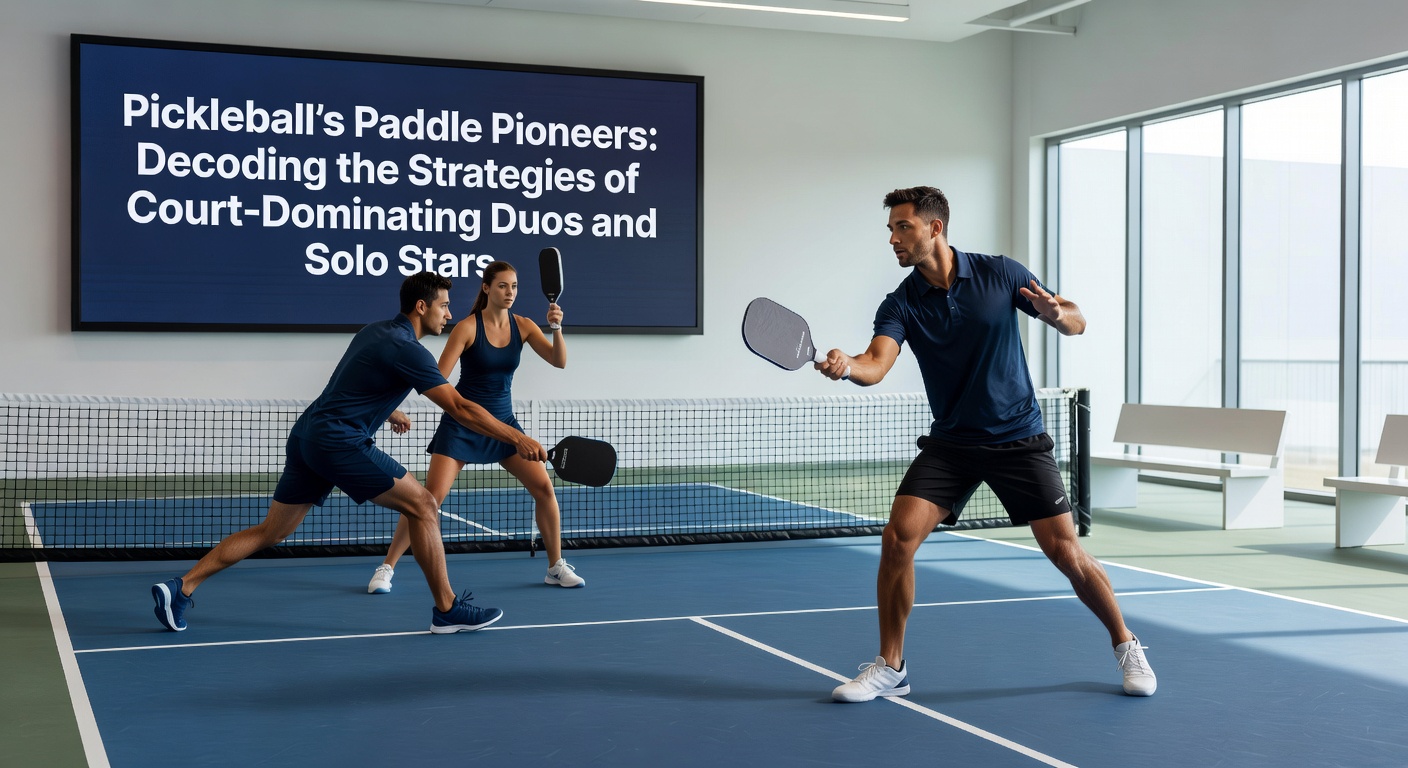
Duo Dynamics: How Court-Dominating Pairs Synchronize for Victory
Doubles, the heart of competitive pickleball where 80 percent of pro events unfold, thrives on synergy, as seen in powerhouse teams like Ben Johns and Colin Johns, who stack positions—crossing during serves to optimize forehand coverage—a strategy data from Major League Pickleball (MLP) credits for their 90 percent win rate in 2024 finals; these pioneers communicate via subtle hand signals and court calls, anticipating partners' moves like a well-oiled machine. Anna Leigh Waters and Catherine Parenteau dominate women's doubles through "I-go" formations, where one player hangs back initially before joining at the kitchen, allowing offensive drives while minimizing exposure; tournament stats show this boosts point conversion by 25 percent against traditional setups.
Turns out, the kitchen line becomes a duo's fortress, with top pairs holding it for over 85 percent of rallies per PPA analytics, using paddle angles to block volleys and counter with speed-ups—sharp overhead smashes that end points abruptly. Riley Newman and Matt Wright, known for their poach-heavy style, intercept cross-court shots aggressively, turning defense into offense; researchers observing their matches note interception rates double those of average teams, often sealing games before the 11-point mark. Yet stacking, popularized by Johns brothers, flips serve dynamics, letting the returner take the stronger side, a wrinkle that's spread globally, influencing tactics in Australian and European circuits alike.
Communication seals deals in doubles; one case from the 2025 MLP Championships saw Waters/Parenteau rally back from a 0-6 deficit through mid-point huddles, adjusting to opponents' soft game—data later confirmed their dink-win percentage jumped from 55 to 78 percent post-tweak. And with April 2026 bringing the International Pickleball Federation's world doubles qualifiers in Canada, duos fine-tune these plays, incorporating drone-filmed scouting to predict rival patterns down to serve spins.
Decoding Core Strategies: Dinks, Drives, and Kitchen Mastery
At the core, pickleball's pioneers hinge success on the third shot, where after serve and return, the drop into the kitchen sets up volleys; figures from 200+ pro matches reveal teams nailing this 60 percent of the time claim 72 percent of games, blending patience with precision. Dinking rallies, those soft exchanges over the net, wear down opponents psychologically, lasting 10 shots on average in elite play, while drives exploit openings for winners—top players mix them 40-60, per video breakdowns.
Singles stars amp up mobility drills, lunging for wide balls without kitchen faults, a discipline honed through off-court agility ladders; doubles duos drill stacking transitions, ensuring seamless forehand walls. Paddle tech evolves too, with textured surfaces gripping the polymer ball for spin control, allowing curveballs that skid unpredictably. Observers note how pros like Johns customize grips—Western for topspin drives, Continental for versatile dinks—tailoring to court surfaces from indoor hardwood to outdoor asphalt.
What's significant is cross-training influences; many pioneers borrow tennis footwork or badminton wrist snaps, creating hybrid styles that baffle purists. In youth academies, coaches emphasize these from day one, building foundations that propel juniors to pro ranks faster than ever.
Training Regimens and Tech Edges of the Elites
Behind the court dominance lie grueling regimens: top duos log 20 hours weekly on partner drills, simulating tournament pressure with fatigue vests; solo stars add interval sprints, mimicking match bursts up to 30 seconds long. Wearables track heart rates peaking at 180 bpm during volleys, guiding recovery protocols that cut injury rates by 30 percent, according to sports medicine reports. Video software dissects rallies frame-by-frame, quantifying spin rates—up to 2000 rpm on pro drives—and feeding AI predictions for opponent counters.
April 2026 spotlights tech integration, with PPA trials of smart courts embedding sensors for real-time strategy feedback, already boosting training efficiency in beta tests; pioneers like Waters experiment with AR glasses overlaying partner positions during practice, sharpening instincts. Nutrition fuels it all—high-carb loads pre-match, electrolytes mid-game—sustaining the 500-calorie burn per hour.
Conclusion: Pioneers Paving Pickleball's Future
Pickleball's paddle pioneers, from solo endurance aces to synchronized duos, decode victory through kitchen control, strategic stacking, and relentless adaptation, propelling the sport toward mainstream arenas; as data underscores their tactics' edge—win rates soaring with third-shot mastery—their blueprints inspire millions, ensuring pickleball's growth accelerates into packed stadiums and global tours. With events like the 2026 PPA Masters on horizon, these stars continue rewriting playbooks, one precise dink at a time.