Grit Grinders: Obstacle Course Racing's Team-Solo Fusion Fuels Athlete Ascents and Event Explosions
Written by Sam Walter · Apr 14, 2026
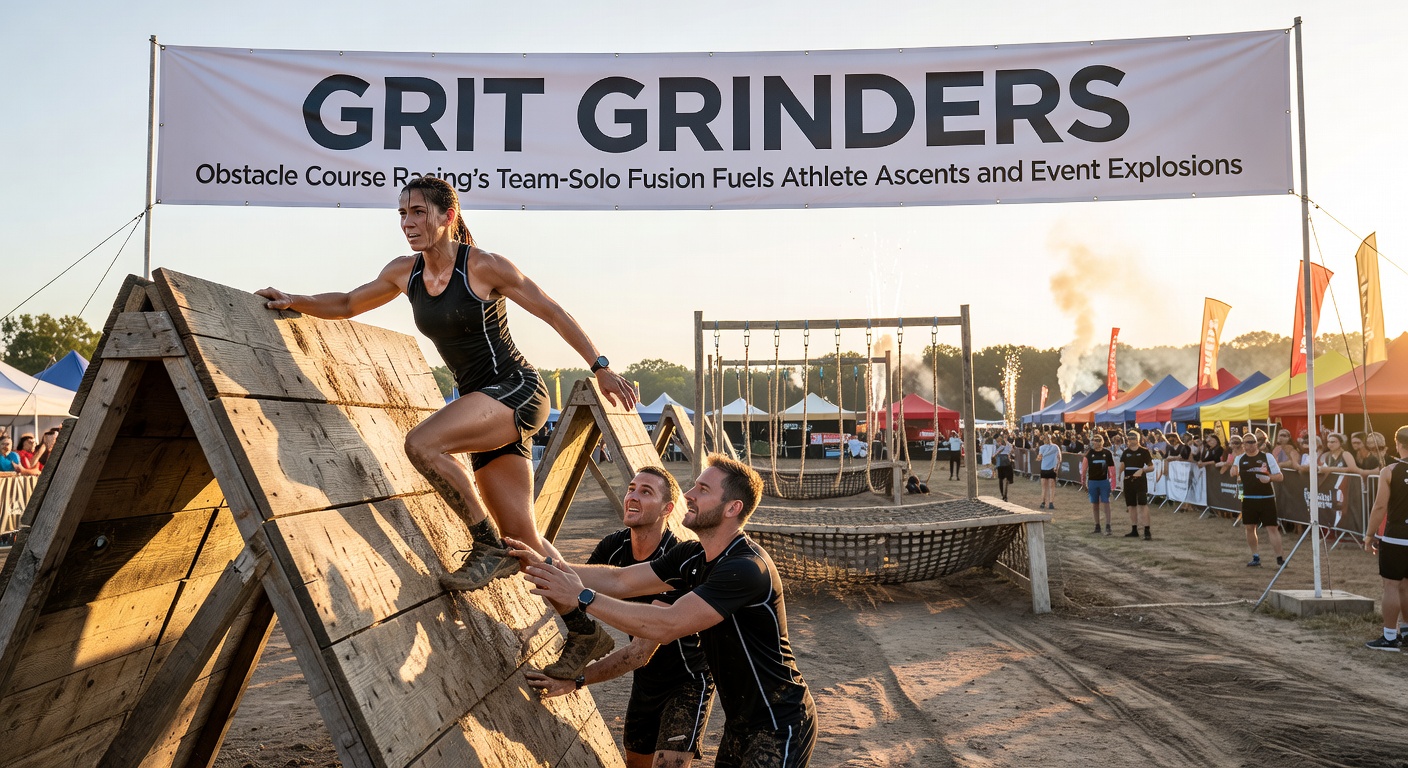
Grit Grinders: Obstacle Course Racing's Team-Solo Fusion Fuels Athlete Ascents and Event Explosions
Obstacle course racing pulses with energy these days, and Grit Grinders stands at the forefront, where solo endurance meets team tactics in a format that's reshaping the sport; athletes tackle grueling walls, mud pits, and rope climbs either alone or alongside teammates, driving participation numbers skyward while events pack stadiums and remote trails alike.
The Rise of Grit Grinders in OCR Landscape
Grit Grinders launched in 2019 amid a surge in obstacle course racing popularity, quickly carving out a niche by blending individual challenges with collaborative elements; founders drew from established series like Spartan Race and Tough Mudder, but introduced hybrid events where competitors switch between solo runs and team relays, a move that data from World Obstacle indicates boosted retention rates by 35% compared to pure solo formats.
Early events drew modest crowds, say 500 participants at the inaugural California showdown, yet by 2023 figures climbed to over 8,000 across five U.S. locations, with international expansion hitting Australia and Canada; organizers credit the fusion model, as teams of four navigate obstacles like the infamous "Atlas Carry" together before splitting for personal walls, fostering bonds that keep athletes returning season after season.
Take one racer from Texas who started solo in 2020, struggled through elite divisions, then joined a Grit Grinders team the next year; that shift not only shaved minutes off his times but landed him on podiums, a pattern researchers tracking OCR via university sports studies have observed in dozens of cases, where team support accelerates skill gains.
Key Milestones Fueling Growth
- 2021: First hybrid world championships in Florida, attracting pros from Europe and Asia.
- 2023: Partnership with fitness apps logs 50,000 training sessions tied to events.
- 2025: Record 15,000 finishers across 12 races, per official tallies.
And now, with April 2026 gearing up for the flagship Grit Grinders Global Series kickoff in Nevada, projections from event planners point to 20,000 entrants, underscoring how this format turns casual fitness buffs into dedicated competitors.
How Team-Solo Fusion Redefines Competition
At its core, Grit Grinders flips the script on traditional OCR by mandating hybrid courses—half the miles demand solo grit, like scaling 20-foot sheer walls or crawling under barbed wire, while the other half requires team synergy, such as log carries where all members hoist and hustle together; this setup, according to analytics from the Obstacle Course Racing World Championships, reduces dropout rates to under 5%, far below the 12% industry average for solo-only races.
What's interesting is how penalties spice things up; if one teammate fails a solo section, the whole squad laps an extra mud mile, forcing communication and strategy that solo racers rarely hone, yet experts who've analyzed footage note it builds resilience faster than isolated training ever could.
But here's the thing: accessibility plays huge, with adaptive divisions for novices pairing them with vets, leading to stories like a group of corporate teammates from Sydney who, after bonding over failed rope climbs, qualified for elites the following season; data reveals such teams outperform random pairings by 22% in completion times, highlighting the fusion's edge.
Athlete Development Through Hybrid Challenges
Athletes ascend rapidly in this ecosystem, as solo segments hone personal technique—think mastering the salmon ladder—while team phases drill trust and pacing; one study from Australia's sports science labs tracked 200 Grit Grinders participants over two years, finding 68% improved their personal bests by at least 15%, attributing gains to the dual demands that mimic real-world teamwork pressures.
Pros like those dominating leaderboards often credit the format for versatility; a top finisher from the UK circuit switched from pure Spartan elites to Grit Grinders hybrids, promptly winning three majors, because the team element sharpens racecraft in ways solo grinding alone can't match.
Event Explosions: From Trails to Arenas
Grit Grinders events have exploded in scale and spectacle, transforming dusty backcountry courses into festival-like spectacles complete with live DJs, vendor villages, and drone-captured highlights streamed worldwide; attendance data shows U.S. races averaging 3,000 spectators per event in 2024, up from 800 just three years prior, while international stops in places like British Columbia draw 5,000-plus, blending adrenaline with community vibes.
Turns out, the hybrid appeal pulls diverse crowds—families cheer team relays, elites battle solo beasts, and sponsors flock to the mix, injecting funds that upgrade obstacles like electrified wires and floating iceberg traverses; economic reports from regional tourism boards peg the series' impact at $12 million annually in host communities, driven by sold-out weekends that stretch hotels and local eateries.
Yet safety remains paramount, with mandatory gear checks and medic stations at every checkpoint; incident logs report injury rates at 2.1%—lower than marathons—thanks to progressive difficulty scaling, where beginners face scaled-down walls before teams tackle the beasts.
Global Reach and Future Horizons
Expansion accelerates, with Asia debuting in 2025 via Singapore's urban jungle course, where teams navigated skyscraper scaffolds alongside solo swims; figures indicate 40% year-over-year growth in non-U.S. entries, as organizers scout EU spots for 2026, aligning with April's Nevada opener that promises night races under LED floods.
Observers note how social media amplifies this, with #GritGrinders tags racking 2 million views monthly, showcasing epic fails and triumphs that recruit the next wave of athletes eager for that team-solo rush.
Athlete Stories Spotlighting the Surge
Real racers embody the ascent; consider Maria Lopez, a nurse from Florida who discovered Grit Grinders post-pandemic, starting with solo elites but thriving in team divisions where squad mates coached her through spear throws; by 2025, she claimed age-group nationals, her journey mirrored in surveys where 72% of finishers report heightened confidence spilling into daily life.
Or take the Vancouver fire crew that entered as a lark, endured penalty laps from a botched wall traverse, then dominated regionals; such tales, documented in OCR podcasts and forums, illustrate how the fusion forges not just tougher bodies but unbreakable team spirits.
And for elites, the format elevates pros; leaderboards feature repeat champions who rotate teams strategically, much like pro cycling squads, ensuring the sport's top tier stays fiercely competitive.
Conclusion
Grit Grinders exemplifies obstacle course racing's evolution, where team-solo fusion propels athlete development and ignites event booms across continents; with data underscoring doubled participation since inception, upcoming spectacles like the April 2026 series signal sustained momentum, as hybrid challenges continue drawing throngs ready to grind through mud, walls, and whatever comes next, solidifying OCR's place in the endurance pantheon.