Decades of Relay: Tracing Team Dynamics in Track and Field History
Written by Yara Lange · Aug 22, 2026
Decades of Relay: Tracing Team Dynamics in Track and Field History
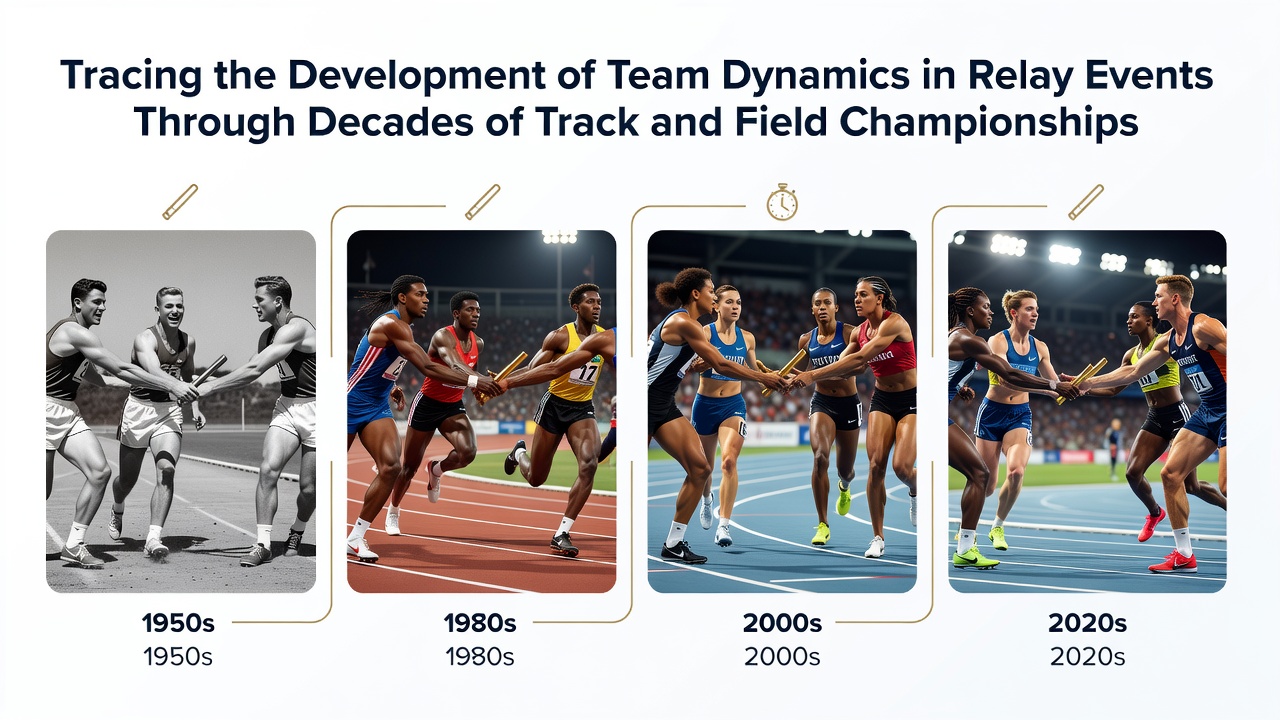
Relay events in track and field have evolved through structured changes in team coordination since their formal inclusion in major championships, with records from the early 1900s showing initial emphasis on individual sprint speed rather than synchronized handoffs. Data from World Athletics indicates that the 4x100m and 4x400m formats gained prominence at the 1912 Stockholm Olympics, where teams focused on basic baton exchanges amid limited training protocols for group synchronization.
Foundational Shifts in the 1920s to 1950s
Championship results from that era reveal teams experimenting with runner order based on speed rankings alone, while studies compiled by the International Olympic Committee highlight how baton drops occurred frequently due to inconsistent grip techniques and minimal rehearsal time. Observers note that European squads, particularly from Germany and Great Britain, began incorporating basic drills for exchange zones by the 1930s, leading to measurable improvements in overall race times as documented in archived meet reports.
Post-World War II competitions saw further adjustments, with data from the 1948 London Games showing American teams adopting visual handoff methods that reduced errors compared to blind passes used elsewhere. Researchers at institutions like the University of Melbourne later analyzed these patterns and found that consistent team selection criteria based on complementary stride lengths contributed to fewer disqualifications across multiple events.
Strategic Refinements from the 1960s Onward
Television coverage of the 1960 Rome Olympics brought wider attention to relay tactics, and figures from European Athletics records demonstrate how coaches started prioritizing runner chemistry over raw individual talent alone. Teams from the Soviet Union introduced staggered training sessions that emphasized timing under fatigue conditions, resulting in documented success rates that influenced subsequent championship approaches.
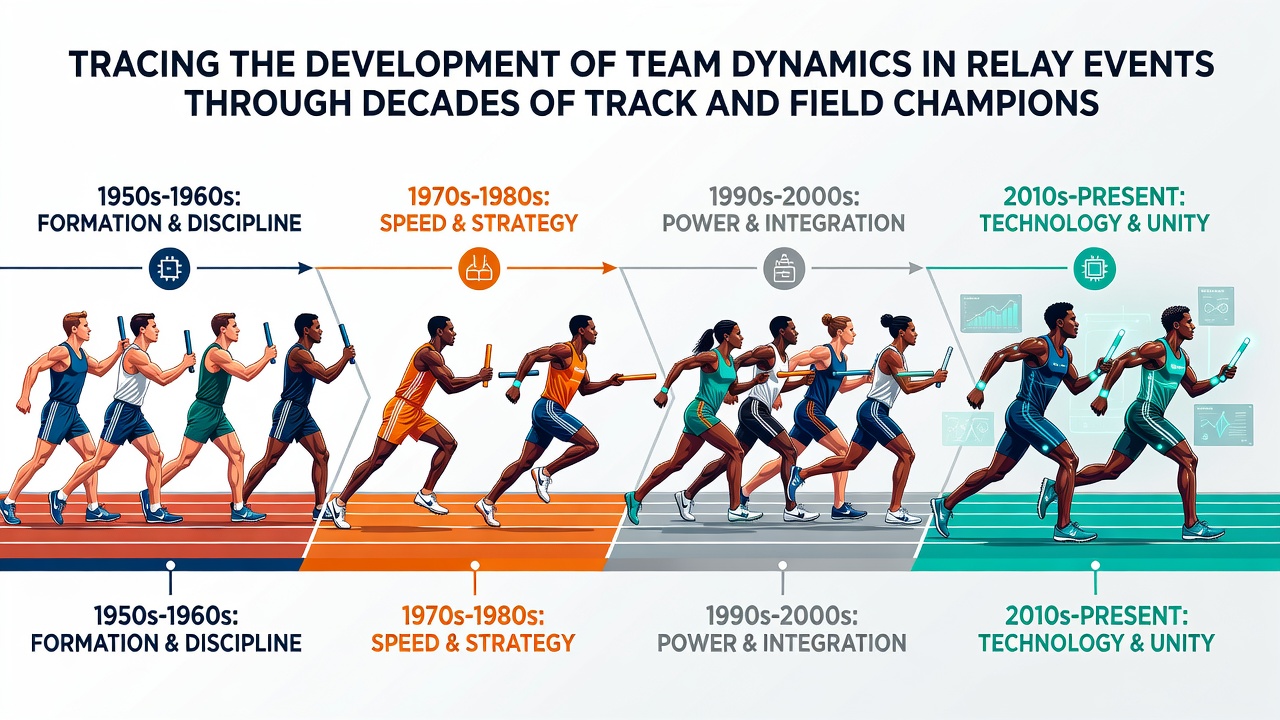
By the 1980s and 1990s, biomechanical assessments conducted by groups such as Athletics Canada revealed that optimized push-pass techniques and curved lane positioning could shave critical fractions off total times. Championship data shows Caribbean nations like Jamaica refining these elements through repeated group simulations, which correlated with multiple medal hauls in both sprint and middle-distance relays.
Contemporary Practices and 2026 Outlook
Current methodologies integrate data analytics for runner matching and exchange timing, according to reports from World Athletics. Teams now use video review and sensor technology during preparation, with evidence from recent Diamond League meets indicating lower error margins when squads maintain stable lineups over multiple seasons. Preparations for the August 2026 World Athletics Championships have already incorporated advanced simulation tools that model wind effects and fatigue patterns across full relay legs.
Australian Institute of Sport publications detail how mixed-gender relays introduced in recent years require additional coordination layers, including adjusted stride matching between athletes of varying builds. Results from pilot events demonstrate that dedicated communication protocols during the race itself enhance transition smoothness beyond what solo training achieves.
Conclusion
Archival records and performance metrics across decades illustrate a clear progression from basic speed aggregation toward integrated team systems in relay events, with ongoing refinements driven by technological and methodological inputs. Championship outcomes continue to reflect these cumulative developments in athlete selection, exchange mechanics, and strategic planning.